
Earth Is Empty
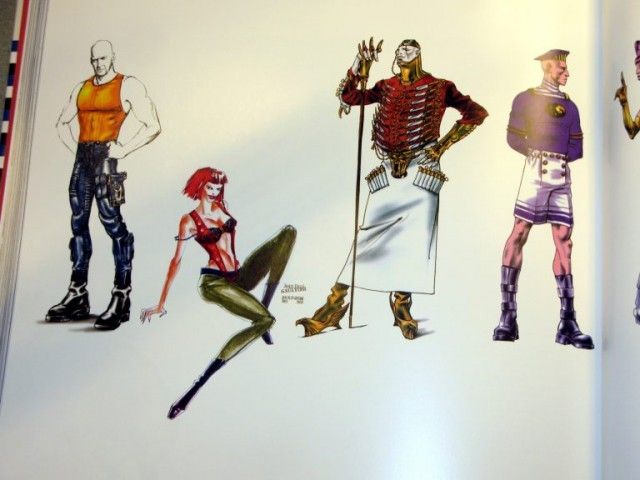
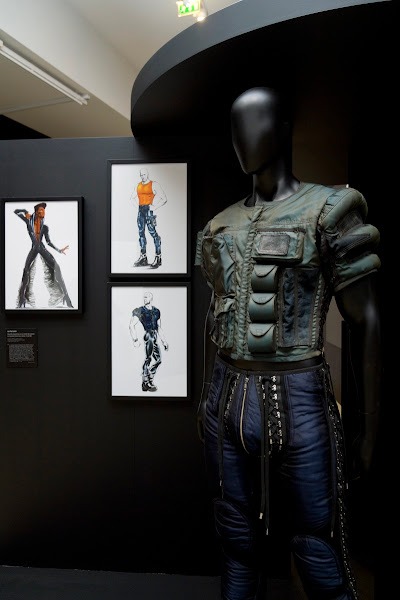
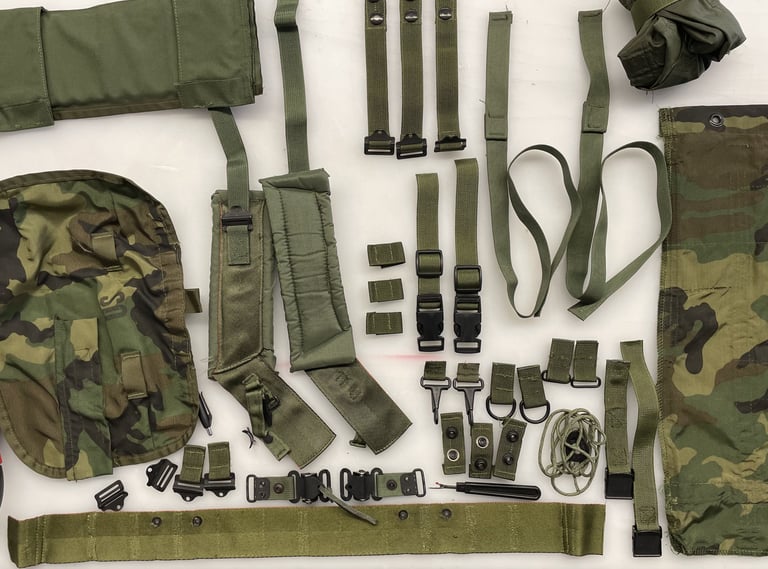
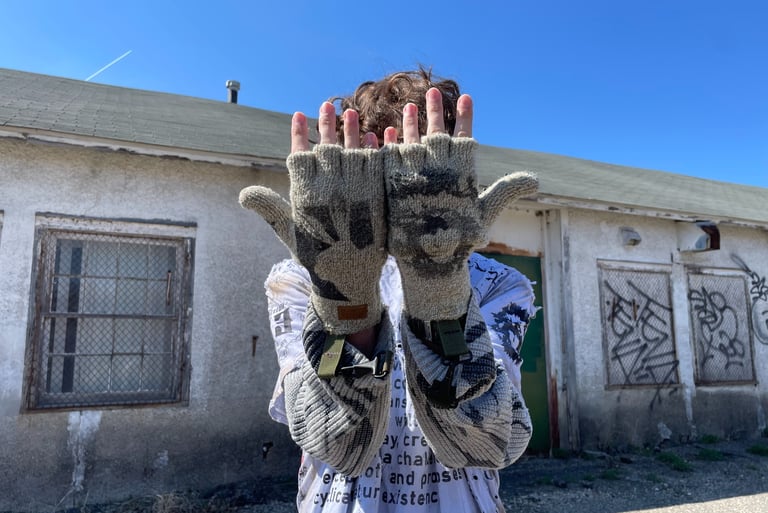
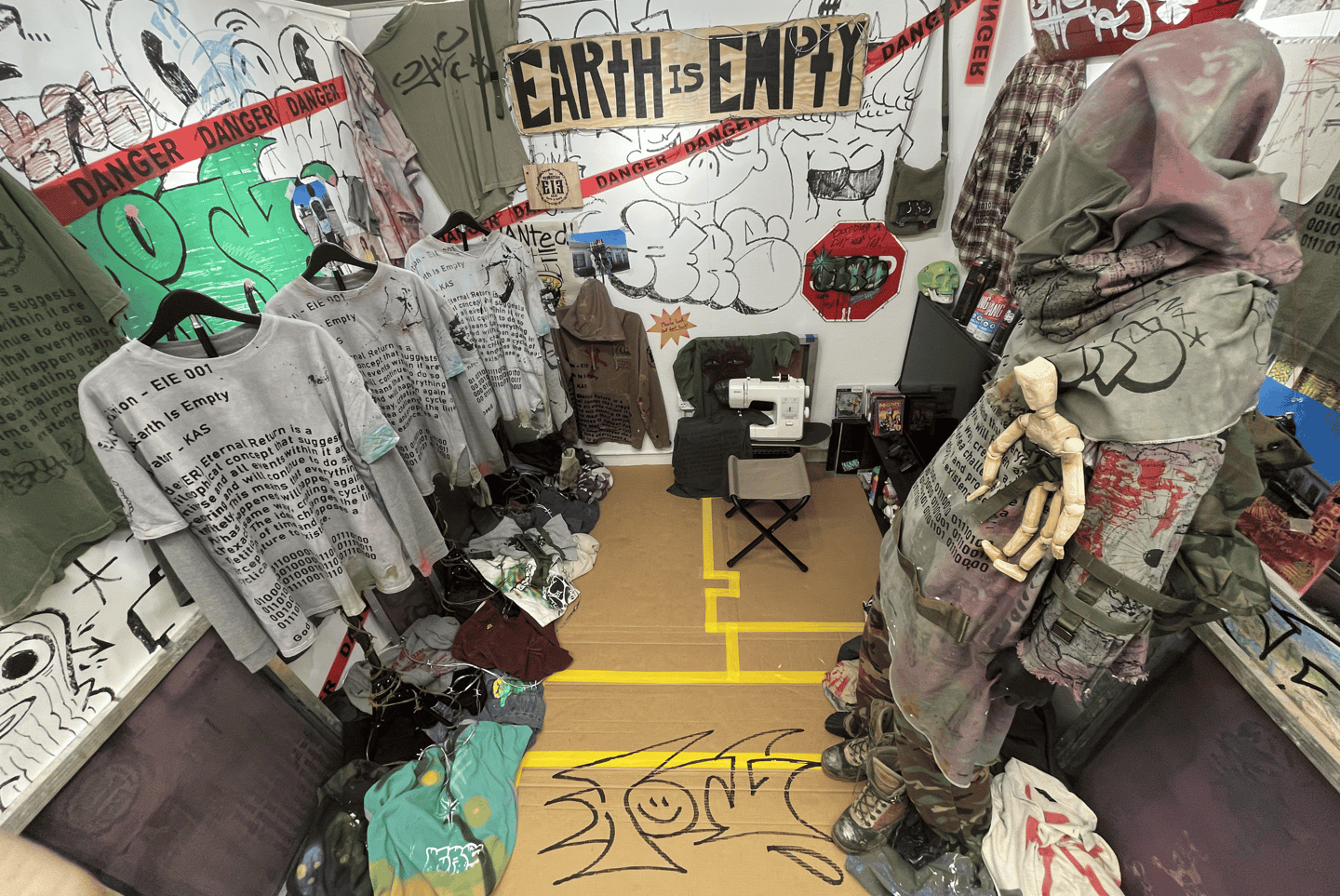
Earth Is Empty is a garment design project based on a conceptualized version of post-apocalyptic Earth, where the main character, Kas, survives and explores an empty world. The garments reflect the same post-apocalyptic design presented over different periods of time (reflecting how the character wearing the clothing adapts to the environment), and I want my project to explore the relationship between clothing, identity, and the environment. My exhibition space reveals the narrative that drives the design behind my character's identity. Each garment is made from “found material” and reassembled clothing to reflect how Kas adapts to post-apocalyptic concerns.
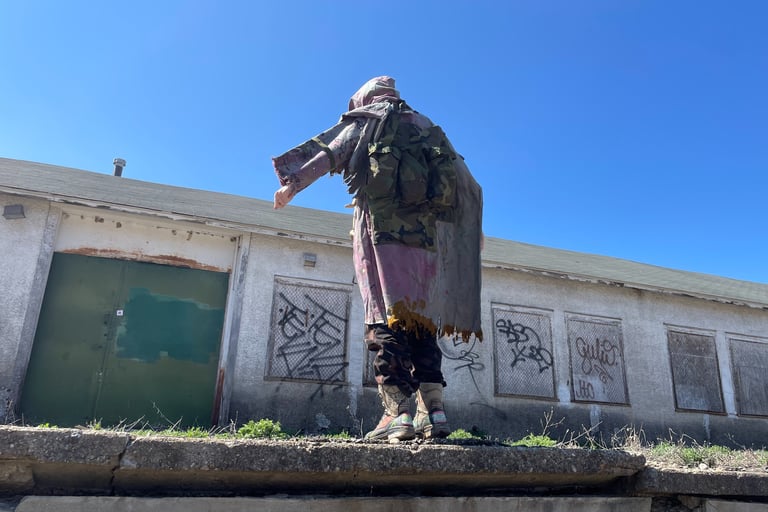
“How would you dress as the last person on earth if you didn't have to conform to trends and societal norms? Clothing in apocalyptic media functions as more than just fashion or aesthetic; it is a material language that can express humanity's relationship with identity and the environment. In this circumstance, clothing becomes a representation of how humans adapt and how they understand themselves in relation to their surroundings without the pressures of consumerism.”
The Role of Cyberpunk in Post-apocalyptic Fashion Design
Fashion in apocalyptic media functions as more than just costume or aesthetic, it is a material language that can express humanities anxieties, predictions of the future, and relationships with technology and the environment. In a futuristic/apocalyptic environment, clothing becomes a representation of how humans adapt and how they understand themselves in relation to their surroundings. This relationship with our environment raises the central question for my research: What does fashion in apocalyptic media reveal about humanity’s relationship with technology, the future, and survival? I plan to explore modern and historical examples of cyberpunk media in order to understand how garments, in this specific environment, function as a reflection of our identity.
Clothing is one of the most recognizable ways to express and understand identity. In today's age, clothing material is defined by corporate companies who are more concerned with how to produce the lowest possible costing material to sell at the highest price, than the expression of identity. Without the background knowledge of garment construction, you might find it difficult to control the “identity” that your clothing represents. As far as cyberpunk media is concerned, clothing usually functions primarily as protection against the environment. Before a character is even introduced you can decipher their level of adaptation and survival. Specific material can represent possible weather conditions; Respirators could suggest a dusty environment, techwear usually indicates rain, and distressing implies previous physical trauma. Every element of a character's outfit can reveal subtle plot points that drive the narrative without having to be directly addressed.
Apocalyptic media reveals our deeper anxieties of just how far our society could fall. There is an overwhelming amount of media that depict earth in this way but I don’t think this is an honest reflection of our view on the future. When posing my original question, I underestimated the lengths some media goes in order to tell its story. There are few representations of the future that actually involve issues we are currently facing, leading to most narratives in cyberpunk media being driven by made-up problems. Besides this, garment design in cyberpunk settings still does a great job of representing our relationship with technology and identity. In my own garment design, I plan to implement similar elements of visual representation in order to represent how my protagonist responds to weather, isolation, and any other challenges that present themselves throughout the narrative. It will represent an exploration of identity through material and how we might continue to define ourselves even when systems collapse.
Contextualization
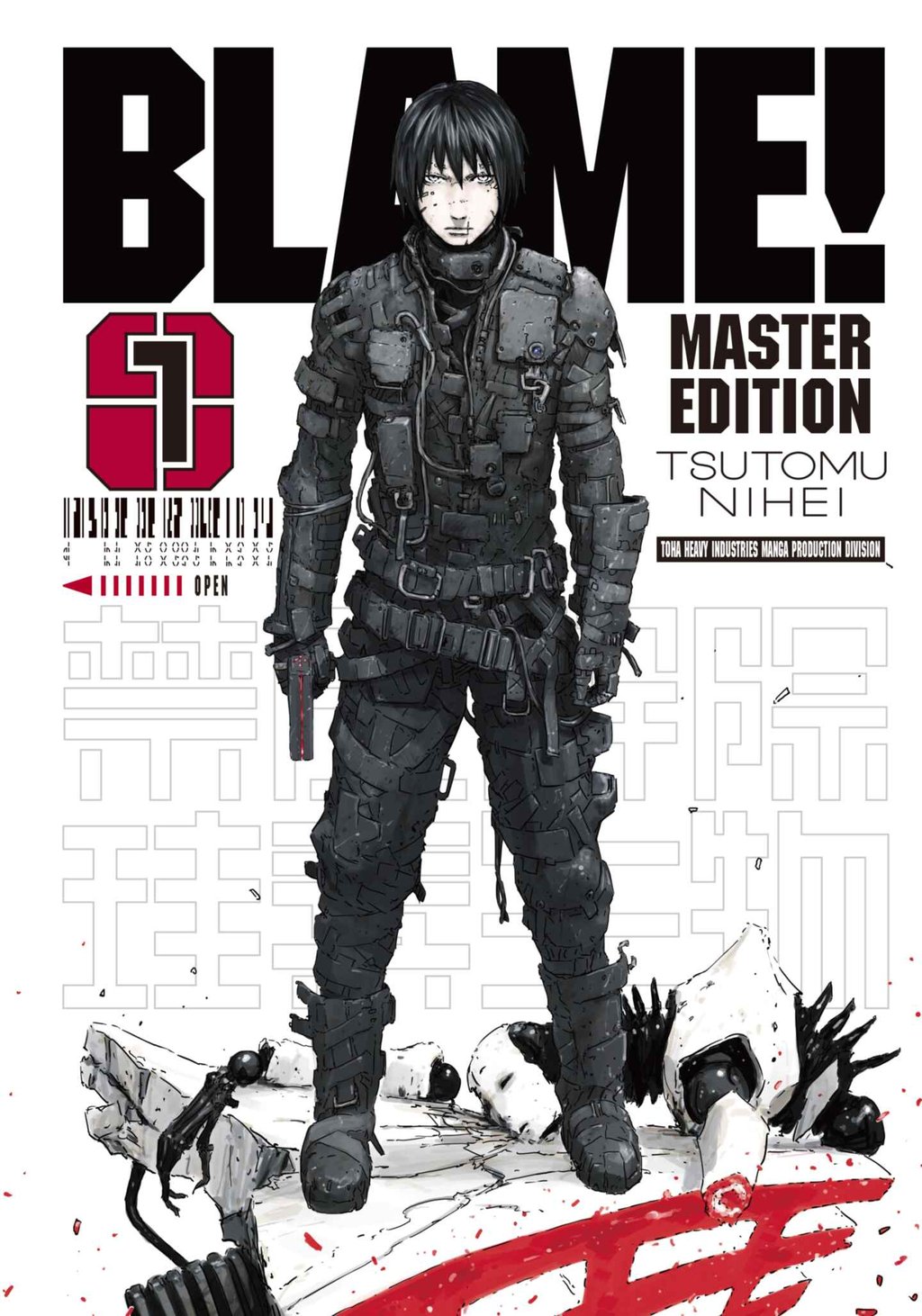
Nihei, Tsutomu. BLAME!. Kodansha, 1997–2003.
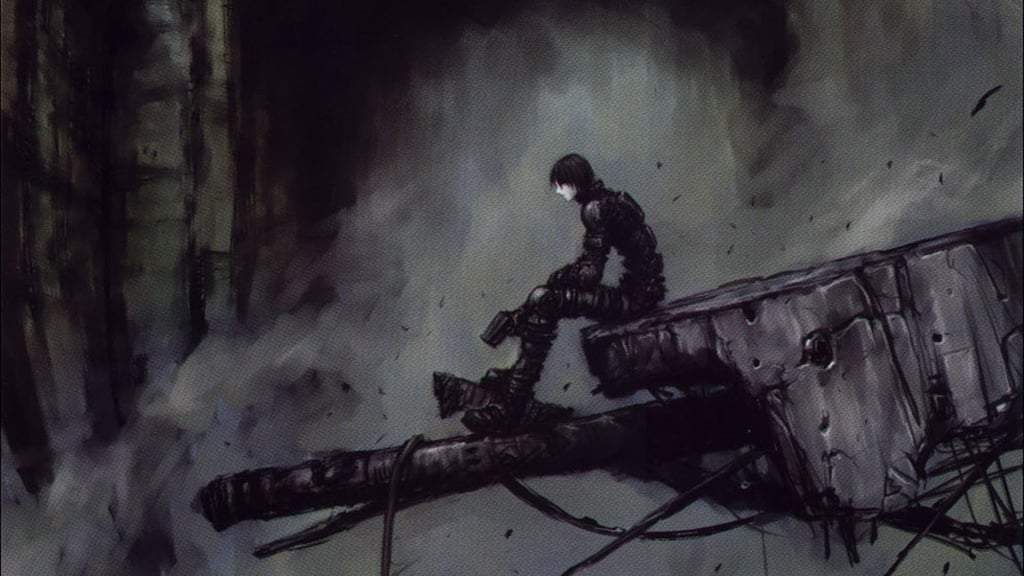
Tsutomu Nihei’s manga BLAME! is a cyberpunk and architectural epic set within an endless megastructure known only as “The City”. The story follows Killy, a near-silent wanderer searching for the lost “Net Terminal Gene,” a remnant of humanity’s
ability to access the network that once governed civilization. The city is made up of massive corridors, suspended walkways, and impossible vertical voids that dwarf the human figure of Killy. Killy's character is almost a representation of scale, taking a backseat to the environment as a character. In this world, architecture itself becomes a living antagonist, a structure that grows uncontrollably, attempting to erase any trace of humanity. The aesthetic, monochrome, claustrophobic, and geometric, expresses both massive scale and anxiety about technological progress. Nihei’s architectural lens directly informs how I want to connect fashion to the environment in my own project. BLAME! treats space, and lack of space, as a character and a reflection of the relationship between characters and the environment. In my project, I aim to explore how architectural principles can influence the design and structure of clothing. Just as Nihei uses vast, imposing structures to convey emotion and narrative, I want to incorporate elements such as scale, form, and material into my designs. The manga’s tension between structure and void also inspires me to think of garments as positives and negatives of the environment. If the architecture in BLAME! expresses humanity’s loss of control over its creations, clothing in my world can serve as the last trace of human authorship—a shell that remembers humanity, graffiti, and survival during a technological infinity.
Chen, Shuo. “Study on Cyberpunk Style in Movies.” Proceedings of the 3rd International Conference on Art, Design and Social Sciences, Minjiang University, 2024.
Shuo Chen’s paper analyzes the influence, and more importantly the function, of the cyberpunk aesthetic in film. Chen defines cyberpunk as "the convergence of cybernetics and punk," basically referring to a style that combines technological advances with social decay. How does clothing react to technology advancing and society collapsing? The writing explores how this genre uses the environment of a post-apocalyptic world to express views or anxieties about automation, surveillance, and technology. Clothing in cyberpunk films often serves as a visual metaphor for the fusion of human and machine, reflecting the characters' adaptation to a dystopian society. It highlights how individuals navigate a world dominated by technology, often featuring elements like augmented reality interfaces or armor-like features. This design not only represents resistance and nonconformity but also symbolizes the struggle to retain humanity during rapid technological advancement. As Chen explains, “The clothing of cyberpunk characters often combines mechanical elements and futuristic materials to highlight the conflict between human vulnerability and technological enhancement.” Something Chen discusses that I really appreciate is the relationship between technology and our view of the future. Fashion in cyberpunk media functions as a visual metaphor for the "hybridization" between humans and technology, or as Chen states: organic and synthetic. Chen views fashion as a tool for world-building that reflects the political and environmental anxieties of late capitalism and digital surveillance. Cyberpunk fashion effectively critiques modern technological advancements by showcasing the potential dangers of unregulated tech growth and its impact on society. Ultimately, Chen concludes that cyberpunk is not merely an aesthetic but a way of imagining the future that reveals the consequences of technological progress. It challenges us to question the implications of merging human life with technology, emphasizing the tension between progress and its potential to erode individuality. By blending dystopian themes with futuristic visuals, cyberpunk fashion serves as a critique of "unchecked innovation" and a reminder of the balance between humanity in a more and more technological world.
Creative process in practice: World Building
The Role of Garment in Timeline EIE
Rabbit Foot Clothing: an undergarment techwear company from timeline EIE
Born after the increasingly harsh weather conditions of 2017, wind and rain started to become serious problems for humans at this time. Rain/snow would continue for years at a time and seasons don’t seem to match those of earths. Wind started to pose serious threats to high rise architecture and also helped the worldwide spread of the 2019 virus as well as the chemical warfare that made them go extinct.
Still made of comfortable, mostly cotton materials, Rabbit Foot aims to create stylish waterproof, wind resistant undergarments in order to survive timeline EIE’s specific weather conditions.
“After traveling to timeline EIE, Protagonist finds out the hard way that loop travel can only bring the body across timelines, not clothing. One of the first problems that the Protagonist has revolves around dressing himself according to weather conditions. An important event takes place on the first day in Timeline EIE: Protagonist discovers a clothing brand he's never heard of called Rabbit Foot Clothing. Rabbit Foot clothing company, which has existed in this world long before the extinction event, becomes the foundation for all the protagonist’s clothing sets. After more time passes, the garment (being worn everyday) starts to become a reflection of the environment. Distressing and the addition of material represents the time that has passed and the challenges that came with it.” (Small sample from The Earth Is Empty project timeline and worldbuilding)
Final Statement
Working on one project for almost 9 months was something I never thought I would enjoy until I had this experience. Forcing yourself to stay loyal to your original ideas can be challenging, but the constraints can be very valuable to your creative process. Relying on a single concept to drive a year's worth of creative work resulted in fully developed ideas that expanded on the theme of my original concept. This being said, I found myself incorporating ideas from this project into my other work. The techniques I learned from this project will undoubtedly enhance my creative process moving forward.